

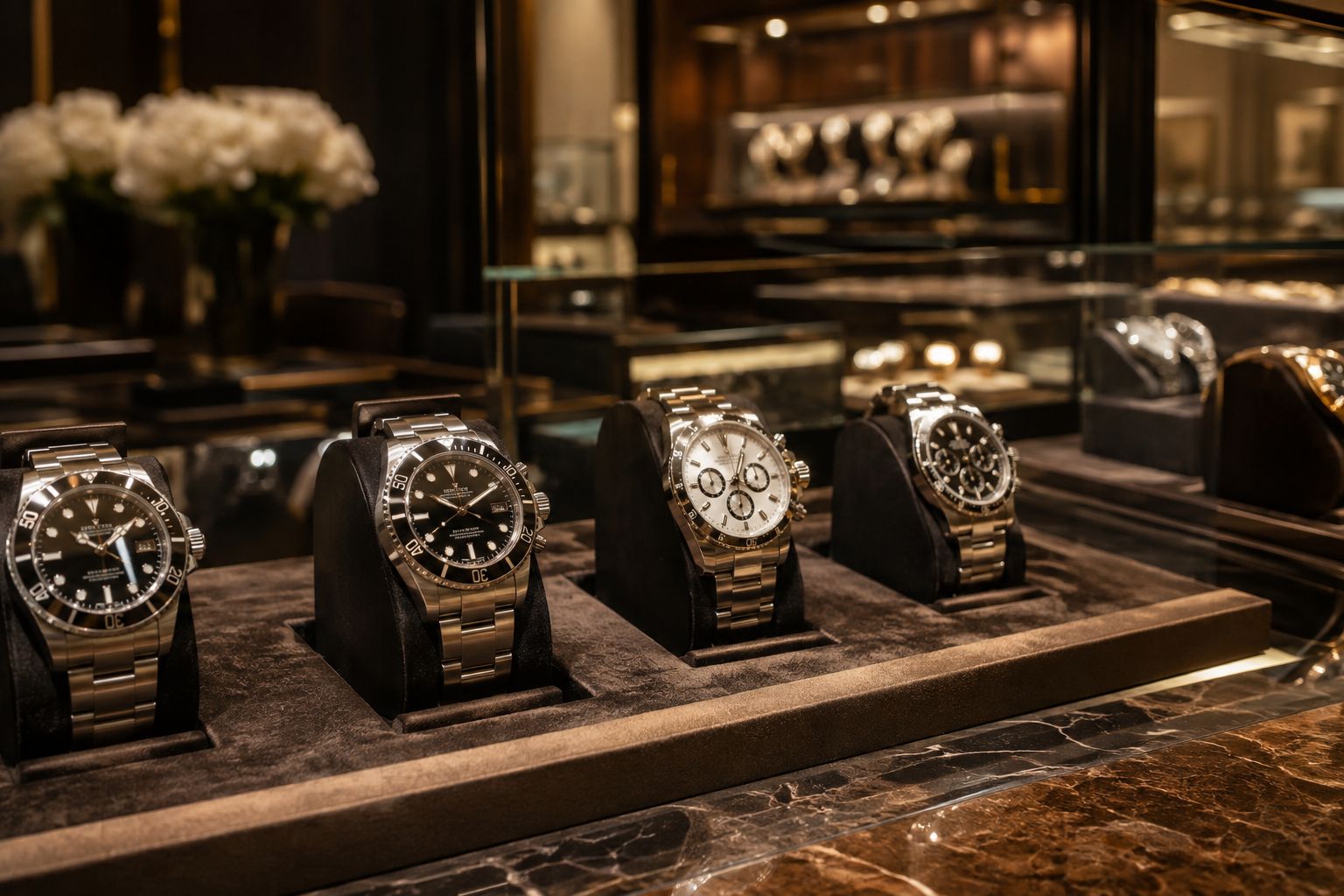
If you’re searching for information on a Rolex watch, you’re probably trying to figure out one of a few things: which model is worth your money, whether buying new or used makes more sense, how to spot a fake, or simply why these watches cost what they cost. This guide answers all of that in one place, with practical details you won’t find in a quick product listing.
A Rolex watch isn’t just a timepiece. It’s a mechanical object built to run for decades, hold its value better than most luxury goods, and (for many models) actually gain value after purchase. But that reputation also makes the buying process confusing, especially with long waitlists, inflated resale prices, and a flooded market of fakes. Let’s break it down step by step.
Why Rolex Watches Are So Popular
Rolex built its name on precision, durability, and consistency rather than flashy marketing. The brand has held Swiss chronometer certification standards for over a century, and every watch that leaves the factory is tested for accuracy before it’s sold.
Part of the appeal is also cultural. A Rolex watch has become a quiet signal of achievement — worn by explorers, athletes, business leaders, and everyday professionals who simply want something reliable. Unlike many luxury brands, Rolex rarely changes its core designs, which means a watch bought today still looks current ten or twenty years later.
There’s also the resale factor. Certain steel sports models routinely sell for more than their original retail price on the secondhand market. That’s rare in watchmaking, and it’s a big reason people treat a Rolex purchase as part investment, part personal reward.
Most Popular Rolex Watch Models Explained
Rolex makes dozens of variations, but most buyers are choosing between a handful of well-known families. Knowing the differences helps you avoid picking a model that doesn’t actually fit your daily life.
Submariner
The Submariner is the classic dive watch and probably the model most people picture when they hear “Rolex.” It’s water-resistant to 300 meters, has a rotating bezel for tracking elapsed time, and works equally well with a suit or a t-shirt. It’s also one of the hardest models to get at retail price due to demand.
Datejust
The Datejust is the everyday, do-it-all Rolex. It comes in more sizes, dial colors, and bracelet options than almost any other model, which makes it flexible for both men and women. If you want one watch that works for the office, dinner, and weekends, this is usually the safest starting point.
GMT-Master II
Built originally for airline pilots, the GMT-Master II tracks two time zones at once using a special bezel. It’s a strong pick if you travel often or just like the two-tone bezel look, which has become iconic on its own (commonly nicknamed “Pepsi,” “Batman,” or “Root Beer” depending on the color combination).
Daytona
The Daytona is Rolex’s chronograph (stopwatch function) model, originally designed for racing drivers. It’s currently the hardest Rolex to buy at retail price, with waitlists at authorized dealers often running years. On the resale market, it commands some of the highest premiums in the entire lineup.
Explorer and Air-King
These two are simpler, no-frills tool watches. The Explorer was built for mountaineering and has a clean, easy-to-read dial. The Air-King has a more technical, aviation-inspired look. Both are good picks if you prefer understated design over the sportier bezels of the Submariner or GMT.
How Much Does a Rolex Watch Cost
Pricing depends heavily on the model, metal type, and whether you’re buying new or secondhand. Here’s a realistic breakdown.
- Steel sports models (Submariner, GMT-Master II): Retail prices generally run from roughly $9,000 to $11,000, but resale prices can run 20–60% higher due to demand.
- Datejust (steel, standard sizes): Retail typically starts around $7,000–$8,000.
- Daytona: Retail starts around $14,000+, with resale prices frequently doubling that figure for steel versions.
- Gold and platinum models: These start well above $30,000 and can climb into six figures depending on gem-setting and complications.
A common mistake first-time buyers make is assuming the price tag they see online is the same as walking into a boutique. In reality, popular steel sports models are rarely available at retail without a wait, and many buyers end up paying a premium on the secondhand market just to get one immediately.
Buying New vs Buying Used
This is one of the biggest decisions you’ll make, and the right answer depends on your priorities.
Buying New
Buying from an authorized dealer guarantees authenticity, a full warranty, and the satisfaction of being the first owner. The downside is availability — popular models often require getting on a waitlist, sometimes for a year or more, and dealers may prioritize customers with prior purchase history.
Buying Used or Pre-Owned
Buying used gets you the watch immediately and sometimes at a lower price than a comparable new one, especially for discontinued models. The risk is authenticity and condition. Always buy from a dealer who offers independent authentication, a return policy, and clear documentation of service history.
A practical tip: when buying used, check the case back and lugs closely under good lighting for polishing marks. Over-polished cases lose their sharp edges and original finish, which noticeably lowers resale value even if the watch still runs perfectly.
How to Spot a Fake Rolex Watch
Counterfeit Rolex watches are extremely common, and some are convincing enough to fool casual buyers. A few checks can save you from a costly mistake.
- Weight — Genuine Rolex watches use solid stainless steel (a special alloy called 904L) or precious metals, giving them a noticeable heft. Fakes often feel too light.
- Sweeping second hand — Real Rolex movements move in a smooth sweep, not a visible tick-tick motion, except on a few vintage manual-wind models.
- Cyclops lens — The date magnifier on the crystal should magnify the date by about 2.5x. Many fakes get this proportion wrong.
- Engravings — Genuine models have a tiny engraved crown at the 6 o’clock position on the crystal, and the rehaut (inner ring near the dial) is laser-etched with the serial number on newer models.
- Serial and reference numbers — These should match the paperwork, and Rolex or an authorized dealer can often verify authenticity if you provide these numbers.
If you’re ever unsure, an independent watch appraiser or a Rolex service center can confirm authenticity for a small fee. This is worth doing before any private sale, even if the seller seems trustworthy.
Rolex Watch Maintenance and Longevity
A Rolex is built to last generations, but only if it’s cared for properly. Neglecting basic maintenance is one of the most common (and expensive) mistakes owners make.
Servicing Schedule
Rolex recommends a full service roughly every 10 years, though watches used daily in tough conditions may benefit from a check every 5–7 years. Servicing involves cleaning, lubricating, and testing the movement, along with replacing worn gaskets to maintain water resistance.
Everyday Care
Avoid pressing the crown or adjusting the date near midnight, since this can strain the internal gears on some movements. Rinse dive watches with fresh water after saltwater exposure, and avoid extreme temperature changes, which can affect the gaskets over time.
Water Resistance Isn’t Permanent
Even watches rated for 300m water resistance need their gaskets checked periodically, since rubber seals degrade with age regardless of use. A watch that was water-resistant when purchased may not be years later without maintenance — this is one detail many owners overlook until it’s too late.
Is a Rolex Watch a Good Investment
This question comes up constantly, and the honest answer is: it depends on the model. Certain steel sports watches (Submariner, GMT-Master II, Daytona) have shown strong resale demand for years, sometimes appreciating faster than traditional investments during high-demand periods. However, this isn’t guaranteed, and the secondhand watch market can shift with broader economic conditions.
Gold, gem-set, and less popular models tend to depreciate more like typical luxury goods. If investment potential is your main reason for buying, focus on models with consistent, long-term demand rather than newer or flashier releases with less price history.
The safest approach is to buy a watch you’ll actually enjoy wearing first, and treat any resale value as a bonus rather than the main goal. Buyers who purchase purely to flip a watch often end up disappointed when demand cools for a specific reference.
How to Choose the Right Rolex Watch for You
With so many models, it helps to narrow things down by lifestyle rather than looks alone.
- Want one watch for everything: Datejust
- Active lifestyle, swimming, diving: Submariner
- Frequent traveler across time zones: GMT-Master II
- Interested in motorsport or chronographs: Daytona
- Prefer minimal, tool-watch style: Explorer or Air-King
- Want something formal for special occasions: Day-Date (gold or platinum)
Before making a final decision, it’s worth spending time on the official Rolex watch collection to see the full range of current models, materials, and specifications directly from the manufacturer. Browsing here gives you accurate reference numbers, official pricing guidance, and detailed images of each dial and bezel combination, which is far more reliable than relying on secondhand listings or social media photos. Many buyers skip this step and later realize they picked a reference that was discontinued or doesn’t match what they saw in person — checking the official collection first helps you avoid that confusion and walk into a dealer with a clear, informed choice.
Try on a few models in person before deciding, since case size and bracelet weight feel very different on the wrist compared to photos. A 36mm Datejust and a 41mm Submariner wear noticeably different, even though the price difference might be small.
Where to Buy a Rolex Watch Safely
Stick to two reliable paths: authorized Rolex dealers for new watches, or established pre-owned platforms and dealers that offer authentication guarantees and buyer protection for used watches. Avoid private marketplace listings unless you can personally verify the watch or bring in a third-party appraiser before paying.
Ask for the original box, papers, warranty card, and service history when buying secondhand. A complete set (often called “full set”) usually holds its value better and gives you stronger proof of authenticity than a watch head alone.
Final Thoughts
A Rolex watch is a long-term purchase, not an impulse buy, and taking time to understand models, pricing, and authentication steps will save you money and disappointment down the line. Whether you’re chasing a specific reference like the Submariner or Daytona, or simply want a reliable everyday piece like the Datejust, matching the watch to your actual lifestyle matters more than chasing hype.
If you’re ready to move forward, start by visiting an authorized dealer to try on a few models in person, or reach out to a reputable pre-owned specialist to check current availability and pricing on the reference you have in mind.