

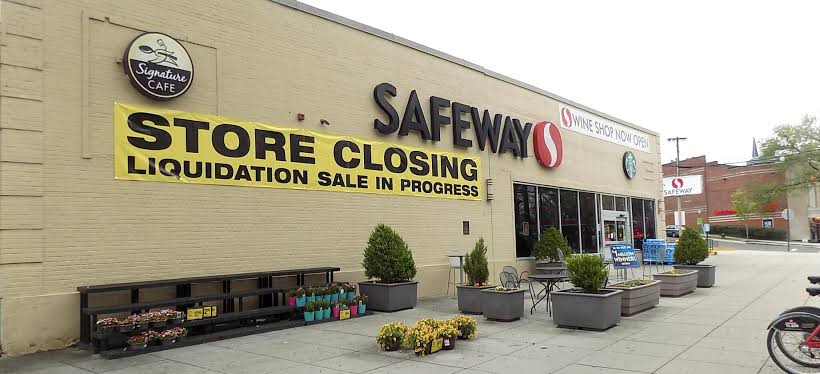
If your local Safeway just posted a “closing soon” sign, you are not imagining a trend. Safeway store closures have picked up speed in 2025 and 2026, and the chain has confirmed more locations will shut down before the year ends. This guide breaks down which stores have closed, why it’s happening, and what it means for shoppers, employees, and neighborhoods that depend on these stores.
Why Are So Many Safeway Stores Closing?
Albertsons closed at least 30 stores in 2025, and the pace of closures continued into 2026. Safeway is one of more than 20 grocery banners owned by Albertsons Companies, alongside Vons, Acme, Jewel-Osco, Randalls, Tom Thumb, and Shaw’s. When people talk about “Safeway closing stores,” they’re really watching one piece of a company-wide store review.
The main trigger goes back to the collapsed Kroger-Albertsons merger. Kroger agreed to buy Albertsons for $24.6 billion in October 2022, but federal and state regulators sued to block the deal, arguing it would raise prices and reduce competition. By December 2024, the merger fell apart completely.
That failed deal matters because Albertsons had built parts of its long-term planning around it. Once the merger was off the table, the company went back to reviewing its full store network on its own terms — and a chunk of that review has meant closing underperforming or high-cost locations rather than merging them into a bigger chain.
The Official Reason Safeway Gives
Safeway’s public explanation is fairly consistent across most closures. The company told Fast Company its store strategy includes opening new locations in areas with strong demand while also making the difficult call to close some stores, and that it works to place as many affected associates as possible in other stores.
In practice, that usually comes down to one word: leases. Most Safeway closures trace back to expiring leases rather than the company pulling out of a market entirely. A landlord raises rent, redevelops the property, or simply doesn’t renew, and Safeway decides it isn’t worth signing a new long-term deal at that spot.
Executive Comments on Store Performance
Albertsons leadership has also pointed to plain profitability. During the company’s first-quarter earnings call, CEO Susan Morris said the company is continually reviewing its store base to decide whether to keep a location, try to turn around its profitability, or close it — and that closures represent a small share of the overall store fleet. That framing matters for anyone trying to guess whether their own store is at risk: it’s not a mass exit from any single state, but a store-by-store financial review.
Which Safeway Stores Have Already Closed in 2026?
More than half of the newer 2026 closures are concentrated in California and Texas, though the list also reaches New Jersey, Connecticut, Nevada, and Washington, D.C. Here’s a look at some of the confirmed closures reported so far this year, organized by region so you can scan for your area quickly.
West Coast Closures
- A Safeway in the Alameda area of California closed in February 2026.
- The Hayward, California store on Jackson Street closed in late February 2026, with all 76 employees transferred to other Safeway locations under the company’s union agreement.
- In Seattle, the Safeway on Rainier Avenue South closed, leaving that neighborhood without a full-service grocery store.
- The Newport, Oregon store on North Coast Highway closed in July 2026 after roughly three decades in business, again tied to a lease that was ending.
- A Safeway in Baker City, Oregon closed on May 25, laying off 82 associates, since it was the only Safeway in that eastern Oregon town.
- The Fillmore District store in San Francisco closed in early 2025 after four decades in the neighborhood, and this is described as one of several Bay Area closures in roughly the past year, alongside earlier shutdowns in Pinole and Vallejo.
Washington, D.C. and East Coast Closures
- The Hechinger Mall Safeway in Washington, D.C. shut down on May 16, 2026, after serving the neighborhood for nearly 40 years. Its pharmacy stopped operating earlier, on April 1.
- Additional closures this year touched New Jersey and Connecticut, though those states carry fewer Safeway-branded stores and mostly involve sister banners like Acme.
Mountain West and Colorado
Colorado saw the single biggest round of Safeway job losses. Albertsons announced plans to close a batch of Safeway stores in the Denver metro area and surrounding towns, tied to merging its Intermountain and Denver divisions into a new Mountain West Division. Several hundred workers were affected across that round of closures, though the company worked with the union to place many of them in nearby stores.
A quick note if you’re trying to track this yourself: store lists published by news outlets are often a few weeks behind reality, because local closures sometimes get confirmed only through a posted store notice or a city government statement before national coverage catches up. If you want the most current answer for your specific address, checking the Safeway store locator directly, or calling the store, is more reliable than any single article — including this one.
How Many Safeway and Albertsons Stores Have Closed Overall?
As of mid-2026, at least a dozen locations across Albertsons’ brands — including Acme, Balducci’s, Randalls, Safeway, and Vons — had closed or been marked for closure that year alone, based on local media reports and the company’s own store locator. Safeway itself operates more than 900 locations, primarily across the western United States, with a smaller footprint in Maryland, Virginia, and Washington, D.C.
Zoomed out further, Albertsons operates 2,243 stores across 22 banners in 35 states, including pharmacies, fuel centers, and distribution facilities. So while a dozen or more closures sounds significant, it’s a small percentage of the total company footprint — which lines up with what leadership has said publicly about this being a targeted review rather than a broad retreat.
What Happens to Safeway Employees When a Store Closes?
This is usually the first question on people’s minds, especially if they or someone they know works at an affected location. The good news is that outright layoffs aren’t the default outcome.
Union Protections and Job Transfers
Most Safeway employees belong to the United Food and Commercial Workers union (UFCW), and collective bargaining agreements typically make layoffs a last resort. In several documented closures, the company transferred the entire staff to nearby stores rather than letting people go. In Hayward, for example, all 76 employees were moved to other Safeway locations under the union agreement, a pattern the company has repeated at many other closures.
That said, transfers aren’t guaranteed for everyone. In one Portland-area closure, the company noted that while continued employment at other locations was available for most staff, a small number of associates could still face separation from the company. If you work at a store that’s closing, the realistic expectation is: most coworkers get offered another location, a smaller number may not, and the details depend on how many open positions exist nearby.
WARN Notices Worth Watching
Larger closures typically trigger a WARN Act filing, a notice required under federal law whenever a company plans a mass layoff or facility closing affecting 50 or more employees at one location. The actual notices are filed with each state’s labor department or dislocated-worker unit, not with the federal government directly, so checking your state’s WARN database is the fastest way to see if your local store has been listed. These filings are public record and often show up before national news coverage does, which makes them a genuinely useful early-warning source if you want to know about a closure before it’s officially announced to customers.
Why These Closures Matter Beyond the Store Itself
A closed grocery store isn’t just an inconvenience — in some neighborhoods, it removes the only nearby full-service option. Both the Washington, D.C. and Oregon locations that closed had operated for decades, long enough that residents had built shopping habits, transportation routines, and in some cases food-access dependence around them.
This pattern showed up clearly in San Francisco’s Fillmore District. When the closure there was first announced, it was pushed back by roughly a year after community pressure and a city agreement, with local leaders citing concerns about the neighborhood turning into a food desert. When the store did eventually close in 2025, it followed decades of service to a neighborhood with a large senior population.
A practical tip if this happens where you live: don’t wait until the announced closing date to plan your next store. Once a closure is public, staffing and inventory usually thin out weeks in advance, and parking lots or pharmacy hours can shrink before the final day. Scout a backup grocery store and, if you use the pharmacy, ask staff directly how far ahead prescriptions need to be transferred — pharmacies inside a closing Safeway often stop filling new prescriptions before the rest of the store shuts down.
Is Your Local Safeway at Risk of Closing?
There’s no public list that predicts future closures with certainty, but a few patterns show up again and again in the stores that have already shut down:
- The lease is old or unusually favorable to Safeway. Landlords eventually push for market-rate rent, and if Safeway decides the location isn’t worth the new cost, it closes rather than renews.
- The property has redevelopment value. Stores on land that a developer wants for housing or mixed-use projects are more likely to close, since the site itself is worth more than the grocery lease.
- There’s another Safeway or Albertsons-brand store nearby. The company can consolidate shoppers into a nearby location without leaving the area without any grocery option, which makes closure a lower-risk decision.
- Sales have been declining for a while, especially in areas facing new competition from discount grocers, warehouse clubs, or delivery-only services.
None of these guarantee a closure on their own, but a store checking two or three of these boxes at once is a reasonable one to keep an eye on.
How to Find Out If Your Specific Safeway Is Closing
If you want a direct answer rather than a general trend, these steps work better than searching news articles:
- Check the Safeway store locator on the official website — closed locations are typically removed, and some “closing soon” locations get a notice.
- Search your state’s WARN notice database. Most states publish these online and update them regularly; they list the exact store address, closing date, and number of affected employees.
- Call the store directly and ask a staff member. Employees usually know before customers do, even if they can’t share exact dates.
- Watch local news coverage for your city, since closures tied to redevelopment projects or city agreements (like the Fillmore District case) tend to get local reporting well before national outlets pick it up.
Frequently Asked Questions
Is Safeway going out of business entirely?
No. Safeway remains one of Albertsons’ largest banners, with more than 900 stores still operating. The closures reported so far represent a small percentage of that total, and the company continues opening new stores in select markets alongside the closures.
Are these closures connected to the Kroger-Albertsons merger?
Indirectly, yes. The merger’s collapse in late 2024 pushed Albertsons back into reviewing its store network independently, and much of the current wave of closures has followed that decision, even though most individual closures are officially attributed to lease terms rather than the merger itself.
Will my Safeway rewards points or gift cards still work if my store closes?
Rewards accounts and gift cards are tied to the company, not an individual store, so they typically remain valid at any other Safeway or Albertsons-family location. If you have store credit or a special promotion tied to one location, it’s worth confirming with customer service before the store closes, just in case.
Do Safeway pharmacies close on the same day as the store?
Not always. In at least one recent case, the pharmacy stopped filling prescriptions weeks before the rest of the store shut its doors. If you fill prescriptions at a store that’s closing, ask the pharmacy staff for the exact transfer deadline rather than assuming it matches the store’s final day.
Final Thoughts
Safeway store closures in 2026 are less about the brand disappearing and more about Albertsons trimming underperforming or lease-burdened locations after its planned merger with Kroger fell through. For most affected employees, union agreements have meant a transfer rather than a layoff, and for most shoppers, it means finding a new regular store rather than losing grocery access altogether — though that’s not true everywhere, especially in neighborhoods where the closing store was the only one nearby.
If you think your local store might be affected, the smartest move is checking the official store locator and your state’s WARN notice database directly, since both update faster and more reliably than any single news roundup.